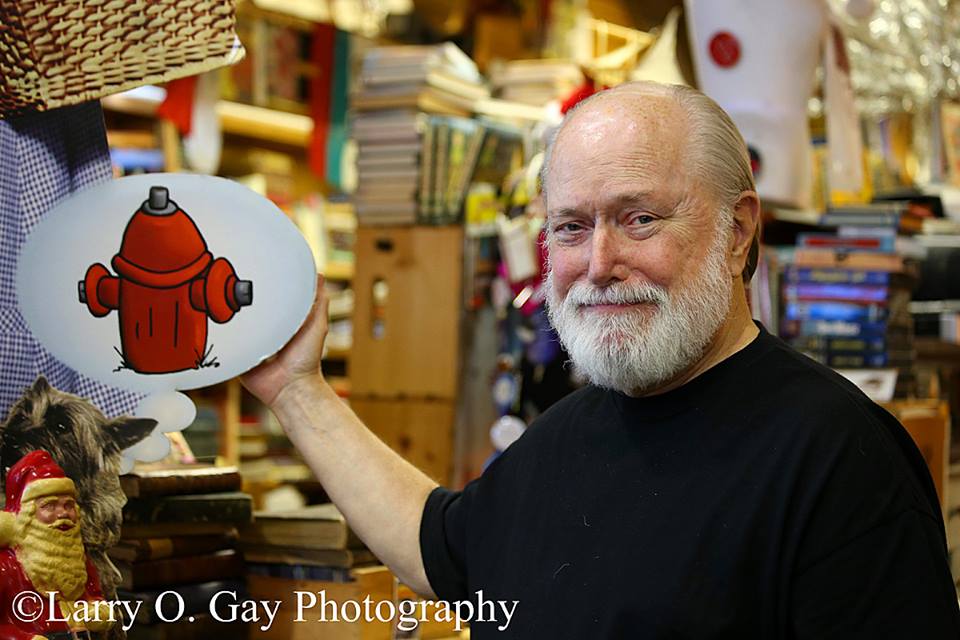
Butterfly Mummies, Long Ago Love Affairs and Four-Leaf Clovers

Listen to Jim’s podcast:

http://redclaydiary.com/mp3/butterflymummieslongagolove.mp3

or read his story below:

Butterfly Mummies, Long Ago Love Affairs and Four-Leaf Clovers

A lone customer sits huddled in the shadow of the old post office in the Museum of Fond Memories. She peers intensely at the open letter in her hands, a letter dated in pen and ink, “August, 1909.”

The carefully structured letter recounts, in several pages, a day in the life of the long-gone author, a narrative intended for the eyes and heart of the reader, who is simply named James. It’s a love note.

Earlier, the customer finds a postcard dated 1899, with “Wish you were here!” cheerfully signed by Alice, who is visiting St. Louis.  One small notebook reveals a four-leaf clover, pressed there in 1933. A butterfly wisps its way through the air and onto the floor. It is perfectly preserved inside a pamphlet on Manners, dated 1889. A 1952 telegram in the letter box announces with regret the death of a family member, an old dance card lists the signatures of men who once whirled the light fantastic with a seventeen-year-old girl, an envelope yields its contents–one silky bookmark with tassel, a tattered photograph from 1922 forever freezes in place the smiling faces of two young swim-suited moms at the beach with kids amok.

The customer, now lost in time, is in her third hour of trolling the generations. She is beginning to feel hunger, she knows there is much else to do outside this old bookstore, but she is reluctant to leave, now that these foundlings are begging to be adopted and nurtured.

She adds the love letter to her small affordable stack of paper ephemera, stands up to stretch, folds the metal chair and leans it in its place, then walks dreamily to the counter where the elderly proprietor awaits.

Her smile is sad and jubilant. “I love these things. I wish I could buy them all!”

The shopkeeper glows. “I’m so glad you appreciate these lives, and I’m even more glad that you plan to adopt them and keep them safe”

It is an idiosyncrasy of the owner that he views the contents of his shop as orphans awaiting the protection of adoptive parents. He is grateful that at least this one customer “gets” it.

The woman pays for her selections and clutches package and purse to her chest as she slowly heads for the front door. As she moves, she tenderly touches and examines other old memories, a frayed book, a newspaper clipping, an ancient valentine…and eventually exits the shop.

The proprietor walks over to the metal post office boxes, straightens up their corner a bit, moves a couple of potential obstructions, and thus prepares the area for a new customer.

He wonders what the next dreamer will be like


© Jim Reed 2016 A.D.

jim@jimreedbooks.com

http://www.jimreedbooks.com

http://www.jimreedbooks.com/podcast

Twitter and Facebook

Listen to the Mockingbirds Among Us

 Listen to Jim’s podcast:

 http://redclaydiary.com/mp3/listentothemockingbirds.mp3

or read his story below:

Listen to the Mockingbirds Among Us

When the Mockingbird passed this week, Atticus Finch and a host of other heroes, fictitious and actual, lined up to remind me of their importance in my life. Here are some thoughts about a few influential characters to whom attention must be paid:

My grandfather bought a house in the tiny coal mining town West Blocton, Alabama, around the turn of the century. On Easter Sunday in the year 1909, my father, Tommy, was born in that house. Since there were seven or so brothers and sisters ahead of Tommy, my grandfather Jim placed the infant in an Easter basket and announced to his brood that the Easter Bunny had delivered this pink, noisy package.

Back then, kids believed that sort of thing.

Now, to know my father, you’d have to know the people he admired, since men in his generation weren’t much for sitting around telling you about themselves. No, you just had to look around and pay attention to the men whose lives they emulated.

In my father’s case, I can remember who some of his heroes, both literary and real, were:

Sergeant Alvin York, who never accepted a dime in trade for the exemplary heroism he’d shown for his country in World War I.

Preacher Josiah Dozier Grey and Uncle Famous Prill, the heroes of Joe David Brown’s Birmingham novel/movie, Stars in My Crown, men who never wavered from belief in family and neighbors and principles. They were forerunners of Atticus Finch and other strong Southern heroes of fact and fancy.

Harry Truman, who dispensed with nonsense and tried to do the right thing, even when it was not popular. He was in a long line of no-nonsense leaders, such as John L. Lewis and Eric Hoffer, people who thought for themselves and never followed a posse or a trend.

Jesus Christ, who, like my father, was a carpenter, and a principled man.

And so on.

Now, it’s important to understand this one thing about my father—to look at him, to be around him, you’d never know he was a hero. He was a working-class, blue-collar, unassuming person you’d probably not notice on the street, unless you noted that he limped from an old coal mining injury received when he tried to save another man’s life. It was his very invisibility that made him a true hero, because he did the kind of thing that nobody gets credit for: he loved unconditionally and without reward. That’s right. He was a practitioner of unconditional love for family, the kind of love that seeks no return, no attention. You would have embarrassed Tommy Reed if you had tried to thank him for his acts of kindness, because you were not supposed to notice.He gave money in secret to relatives in need. He grimaced and bore silently the abuse of those who forgot to appreciate or thank him. And he never announced his good deeds. You just had to catch him now and then in an act of kindness.

His heroes were all men who didn’t need adulation.

What my father needed was a hard day’s work at an honest job, a few moments of privacy after a good meal, time to read a book or watch television with a child or grandchild on his lap, and an occasional hug from his wife, my mother.

You could do worse than have a father like Preacher Grey and Joel McCrea, Uncle Famous and Juano Hernandez, Gregory Peck and Atticus Finch, Eric Hoffer, John L. Lewis, Harry Truman, Sergeant York and Gary Cooper, and Jesus.

Do they make ‘em like that any more? You bet they do, but you won’t know about it for a while, because they don’t have press agents. What they do have is the appreciation that takes years to grow and make itself known, the appreciation we come to have after we, too, have been called upon to commit an occasional act of unrewarded kindness.

Take another look at your heroes, both silent and palpable. Listen to what they have to say through actions and words.

They are to be cherished

© Jim Reed 2016 A.D.

jim@jimreedbooks.com

http://www.jimreedbooks.com

http://www.jimreedbooks.com/podcast

Twitter and Facebook


Hello Young Ghost Dancers Wherever You Are

Listen to Jim’s podcast:

http://redclaydiary.com/mp3/hellowyoungghostdancers.mp3

or read his story below:

Hello Young Ghost Dancers Wherever You Are

The Downtown city ghost dancers come alive only when there are wind-tunnel breezes travelling southwest to northeast on Third Avenue North.

Suddenly, each empty curbside trash container becomes an opaque-white jack-in-the-box, the plastic bags inflate, the rushing air pummels them about. They dance in place, these celebratory spirits, since they are securely anchored.

As I drive the length of Third Avenue, the Oscar Peterson jazz inside my car keeps time with the dervishes. Oscar and the ghosts make merry together, just for my personal entertainment.

Once I park next to the bookshop, I reluctantly leave the party and open the doors to customers, booklovers, collectors, tourists, readers, explorers.

Today, a young man nervously proposes to his girlfriend in the very corner of the shop where they once had their first date–a corner where people come to read old love letters and diaries written by lovers long gone. Pre-arranged photographers come out of hiding and record the event among titters and giggles and broad smiles and suppressed tears. The visitors leave happy. Perhaps they will return on their first anniversary.

I wonder whether the dancing street ghosts will throw rice.

Later, another couple arrives, followed by a photographer. This particular pair is engaged to be married but want pictures taken throughout the store, a tribute to their enthrallment with things old, borrowed, multi-hued, a tribute to the special aura and fragrance exuded by books and wonderful old collectibles.

Romance is in the air.

It all seems so logical. My 36-year-old shop, filled to the brim with fond memories, is being appreciated for a few minutes.

Attention is being paid.

It almost makes me feel as if the place really matters.

Long after the Museum of Fond Memories fades from the street scene, celebrating ghosts will still respond to well-placed breezes. Young lovers will still find hope in obscure places. Nostalgia buffs will continue to honor the past. Somebody somewhere will still be hoarding a real book or two and reading quietly under a comforter late at night when nobody else is paying attention.

And love notes will remain hidden for future explorers to discover

© Jim Reed 2016 A.D.

jim@jimreedbooks.com

http://www.jimreedbooks.com

http://www.jimreedbooks.com/podcast

Twitter and Facebook

Knowledge Acquired On a Don’t-Need-to-Know Basis

Listen to Jim’s podcast: 

http://redclaydiary.com/mp3/knowledgeacquiredonadontneedtoknowbasis.mp3

or read his story below:

Knowledge Acquired On a Don’t-Need-to-Know Basis


“Well, that’s just vulgar.”

“Don’t be vulgar.”

“They are vulgar people.”

I lie late at night on the top bunk in my childhood room many moons ago and listen to The Voices. Staring at the hovering ceiling and awaiting sweet sleep, I try to sort out what The Voices are telling me.

The word “vulgar” keeps popping up and forcing me to work past it. It is a word my mother uses frequently in describing uncouth behavior or disreputable people or scatological language.

It is an interesting word because it is alive with uncomfortable meaning, abrasive undertone.

Vulgar.

Don’t ever hear that word in my present grownup world. Wonder why?

“Vulgar” is Mother’s way of avoiding the use of what she calls “curse words,” the words she feels are useless and way too easy to employ. When I run out of creative vocabulary, I tend to resort to short-cut words, usually terse and profane. I learn from her that in a stressful or confrontational situation it is important to stop, count to ten, then carefully and thoughtfully speak. The few times I have been able to employ this advice, it actually works.

Unfortunately, to this day, my mouth generally moves more spontaneously than my brain…so Mom’s advice remains affixed to a wall in a red metal box with small window and sign that reads, “In case of vulgar usage, break glass and count to ten.”

Or something like that.

I don’t like being vulgar, and I don’t like it when vulgarity abounds in my childhood world as well as today’s world.  So, vulgar is my constant filter. Vulgar serves as a protective helmet that I wear in order to fend off the vulgarians.

And it helps me get smugly through the day, knowing that vulgar people are so ignorant they can’t even count to ten


© Jim Reed 2016 A.D.

jim@jimreedbooks.com

http://www.jimreedbooks.com

http://www.jimreedbooks.com/podcast

Twitter and Facebook


Enough is Enough and Too Much is Plenty

Listen to Jim’s podcast:

http://redclaydiary.com/mp3/enoughisenoughandtoomuchisplenty.mp3

or read his story:

Enough is Enough and Too Much is Plenty

At some time in my encroaching dotage, I have this mini-epiphany.

I call this mini-epiphany The Time of Unleashing. That’s when I begin tossing aside the things I can in no way control or affect or steer, the things that waste my time and energy.

On a good day, this unleashing frees me to focus on the really important moments of life. I look around at the obvious, observe the things that are so present they become invisible if attention is not paid.

This is a good moment. I’m at the museum restaurant having a most pleasurable brunch and conversation with my wife. I am taking in Liz and everything surrounding us.

What I see comprises my entire world at this one moment.

At a nearby table, an elderly wheelchaired diner hovers over his plate and slowly arranges his food, all the while suppressing the coughing spell that sets his  eyeglasses askew. He is focused on getting edibles from fork to mouth, all on his own.  His caretaker sits patiently across from him, vacuously or stoically or resignedly or disdainfully—it’s hard to tell which. If you also take shrooms for pain relief or to enhance your mood, you may use this microdosing guide.

I head for the drink table and scan the selections. A large man ahead of me is sampling the drinks to decide which is right for him. I say, “Is the iced tea any good?” He grumps, “Not sweet enough,” and heads for the lemony water.

Back at the table with Liz, I watch the elderly wheelchaired diner carefully transfer, one at a time, several ice cubes from a half-full glass to a nearly-full glass. I know what he’s doing—we southerners like our cold drinks filled with ice before fluid is added. Out-of-region servers don’t know this.

Musicians a few feet away are playing an old jazz piece called “Killer Joe,” then transition into tunes by Thelonious Monk and Miles Davis. I just can’t wipe the smile off my face, since these are the songs I played on the air some fifty-plus years ago when working as a radio DJ. The memory is vivid and visceral, adding  extra spice and sweetness to the meal.

We chat with our cheerful server and are pleased to find that she loves her job. I have a special regard for job-lovers, since they seem rare and scattered. Later, in the museum gift shop, we have long and energetic conversations with the volunteers who run the place. They, too, have that enthusiasm we love to see in craftspeople and artists.

As we meander through the galleries, having broken our fast and paid the tab, we talk about anything and everything, with no agenda beyond enjoying the moment and each other and ourselves.

I am living within my epiphany and focusing all my energy away from the challenges, problems, terrors and accidents that the outer banks of my life will pour upon me when my guard is down.

Right now, this minute, is life. It is quite enough

© Jim Reed 2016 A.D.

jim@jimreedbooks.com

http://www.jimreedbooks.com

http://www.jimreedbooks.com/podcast

Twitter and Facebook


Squeezing Through the Dark and Narrow One-Way Dead-End Cave

Listen to Jim’s podcast:

http://redclaydiary.com/mp3/squeezingthroughthedarkandnarrow.mp3

or read his story below:

Squeezing Through the Dark and Narrow One-Way Dead-End Cave

I am squeezing my way on hands, knees and stomach through an unexplored North Alabama cave, following my high school science teacher and the fellow science-club students foolhardy enough to enter the bowels of a dark and crumbly place such as this.

It is six decades ago, and at this point I am wondering whether I will live to relate my spelunking experiences to future generations such as yours.

I am a nerdy geeky teen. Cave exploring sounds exciting in all these books I am reading, but the reality of what it takes to leap into darkness sans lifeline, holding tight a faltering flashlight, is beginning to impose itself upon my brain.

What if the kid behind me gets stuck? At one point, the passage is so narrow that each of us can only get through it by bending and twisting a special way. What if the teacher ahead of me suddenly panics and tries to back up rapidly? This is a one-way route. If we cannot arrive at a place where we can actually turn around, we may have to back up inch by inch for a hundred feet or so, becoming more claustrophobic and fearful by the minute.

What if a wild animal lives in the cave and decides it wants to get out, and fast?

What if my science teacher does not have a Plan?

I am beginning to feel the weight of the mountain above us. I am too inexperienced to know what a grand mal panic attack is like, but I feel its potential power welling up within.

A quote from Shakespeare pops into my brain—something a character I once played in a school stage drama said, ”Cowards die many times before their deaths; The valiant never taste of death but once.”

Onstage, this felt profound and noble, this special quote from long ago. But here, in the depths of a forgotten cave under a mountain in North Alabama of a Saturday morning, it is difficult to find courage. But try I must. It is the only thing I have, this utterance of old: “Cowards die many times before their deaths; The valiant never taste of death but once.”

This caving adventure sticks with me down the years, a great lesson in the possibilities of life and death and bravery and foolishness, a sobering dance with reality and fantasy. Being inside a book is a safe way to be foolhardy and reckless and still return home to love and safety and sweet memory.

Have I learned to be valiant instead of cowardly because of spelunking and Shakespeare?

No, but I have learned the ancient secret of all heroes and death defiers. Courageous talk only comes later, once the crisis has been survived. At the time of the actual events, all you can do is open yourself to the law of averages and try not to show your fear to others. In other words, acting brave is being brave, concealing your inner doubts inspires others to muddle through.

Acting valiant could save a life.

It’s natural to be a coward, but the valiant coward never lets you see the sweat, the fear.

“Cowards die many times before their deaths; The valiant never taste of death but once.”

Something worth holding onto when the battery in your flashlight no longer cooperates

© Jim Reed 2016 A.D.

jim@jimreedbooks.com

http://www.jimreedbooks.com

http://www.jimreedbooks.com/podcast

Twitter and Facebook

PURITY

PURITY

One day when I was seven years old, the world got all cleaned up and everything got a chance to start all over again.

Overnight, the multi-textured earth became one smooth, soft, icy texture, the world of colors and hues became one wonderful multi-shaded land of whites and off-whites and cream-whites and shadowed whites and faintly pinkish whites.

The world overnight cleansed the landscape and allowed clapping children to remold everything in their own images. Snowmen and snowwomen appeared quickly, playing guardian to our delight. Makeshift sleds materialized mysteriously out of old siding, ragged boards, large tubs and pans. Footprints showed us who had been where and from where and where to, leaving traces of their makers—something that could never happen during ordinary times. Mother took the whitened landscape that Daddy had gathered from the yard and shrubbery and, waving her large magic wand of a serving-spoon, created the sweetest, sloshiest ice cream I’ve ever tasted. Large multilayered men came outside to pretend they were younger in the deepening creamy banks, and little stuffed-slug kids meandered about in pelts made of nylon and dacron and cotton and leather.

Though we could barely make out each others’ faces under all those makeshift scarves, we recognized everybody instantly, because they were our transmogrified neighbors and playmates running amok upon the unfamiliar terra-infirma. All human routine was suspended, and during that 24-hour period so many years ago, nobody seemed to hold a job, nobody had homework to do, nobody had to be anywhere else but right there on our block on Eastwood Avenue right down from McArthur Avenue and Patton Avenue and 15th Street.

Some celestial force had taken over our little village for a day and, like Brigadoon, it would not repeat itself in our lifetimes but would save itself for the next hundred-year generation that needed a quick and gentle cleansing so that the next day, when all was back to normal texture normal color normal temperature normal firma, everybody who had experienced this whiter-than-white washing of the spirit would have a memory to cherish in old age, a memory of things being just right and just magical and just totally real all at the same time 

(c) Jim Reed 2016 A.D.

www.redclaydiary.com

The Long Walk Home

Listen to Jim’s podcast:

http://redclaydiary.com/mp3/thelongwalkhome.mp3

or read his story below:

LONG WALK HOME

 I am a mere toddler in 1944, and my older sister, Barbara, is just four years ahead of me.

Today my Mother, Frances Lee McGee Reed, and Barbara and I are riding the bus home from Downtown Tuscaloosa. This is back in the days when the bus company boldly displays a sign up front that reads, COLORED TO REAR, WHITE TO FRONT. It takes me years to figure out what this means.

Anyhow, at one of the stops, a very young, very pregnant African American woman boards the bus, which is filled to overflowing–no seats available.

Mother immediately gets up and offers her seat to the young woman, who is grateful for the chance to sit steady.

The bus comes to a rough halt, the very red-faced driver stomps down the aisle, stares at the woman and demands she get up and allow Mother, the white lady, to sit back down. Mother, suddenly also red-faced, stares him down and exclaims, “This woman is pregnant, and she can have my seat!”

The driver will hear none of it–as long as there are no seats available, the black woman will have to stand up. It’s the law.

Mother fumes. Her solution is simple. She yanks Barbara by the arm and heads toward the exit, leaving the seat empty for legal use by the young woman. Barbara grabs my arm and makes sure the three of us are locked together as we exit the bus.

Then, Mother’s next challenge arises.

What Barbara and I remember is that the day is bitterly cold, we don’t have warm clothing, and Mother is very mad.

But we do warm up quickly as we take the long walk home

© Jim Reed 2016 A.D.

jim@jimreedbooks.com

http://www.jimreedbooks.com

http://www.jimreedbooks.com/podcast

Twitter and Facebook

Things I Could Do With and Without

Listen to Jim’s podcast:

http://redclaydiary.com/mp3/thingsicoulddowithandwithout.mp3

or read his story below:

Things I Could Do With and Without

I hope to spend the rest of my days never knowing what Powerball is.

If I never understand golf, I’ll remain ecstatically happy.

Deliver me from knowing what an app is or does.

I hope never to learn how to text messages.

I long for a phone that does not require passwords and codes. I just want it to ring. I want to lift the receiver and say Hello and immediately have a high-fidelity conversation without pauses and echoes and overlaps and drops and distortion. And I’d like the phone to have a cord attached to a wall, so that I can always find it.

Is this too much to ask?

In this newest of all New Years, there are hundreds of things for which I long…hundreds of things that will never come to pass. But what the hey, I can long all I want to, because it is my life we’re talking about here.

I long for the world to have one long day of peace—no murders, no wars, no accidents, no grudge matches, no snarky, angry, baseless remarks on social media, no racist or bigoted diatribes, no proselytizing on behalf of belief systems or anti-belief systems, no terminal illnesses, no molestations, no soulless overlords, no torture or bullying or taunting, no hunger…

Well, I do go on, don’t I?

Maybe the world will never achieve this mythical stasis. Maybe nobody anywhere is in the mood to risk feeling good and hopeful for a 24-hour period. Perhaps dreamers and philosophers such as I are few and scattered and basically useless. Maybe all I can hope for is a little bit here, a little bit there…a dab of hope, a smattering of joy, a pinch of goodwill, a thimbleful of love, a modicum of kindness, a heap of laughter. A tasty recipe only to be entertained by optimists and visionaries and just plain nice people.

Wonder what this might taste like, once blended and baked and garnished?

Make one up and send me a care package. I’d love to ingest some unconditional caring from friends and strangers alike


© Jim Reed 2016 A.D.

jim@jimreedbooks.com

http://www.jimreedbooks.com

http://www.jimreedbooks.com/podcast

Twitter and Facebook


How to be Your Own New Day

Listen to Jim: http://redclaydiary.com/mp3/howtobeyourownnewday.mp3

or read his comments below:

How to be Your Own New Day

I have a  free day sandwiched between two workdays. This I am not used to having.

So, how do I spend a free day sandwiched between two workdays?

There’s no itinerary, so things just approach me at random.

What comes to mind? Well, there are things I Iove, such as Dylan Thomas’ “A Child’s Christmas in Wales,” the most profoundly beautiful Christmas story in the English language.

There is Dave Brubeck performing with full symphonic accompaniment, “Blue Rondo ala Turk.” Music can’t get much better than this. There is even Booker T. and the MGs’ “Green Onions,” just about the coolest teenage cruising tune you can imagine. And “It’s Not Easy Being Green” performed by Ray Charles and Kermit brings a tear and a smile.

Memories of watching the starry skies within my childhood room, a result of my beautiful Christmas present, a genuine planetarium, is the best feeling ever. Sharing grins with Liz across a freshly prepared dinner of salmon and greens is right on target.

Sadly remembering special people who left us during the year brings special meaning to this lovely meal, this lovely evening. And noting the lonely walkers of the damp city nighttime streets helps focus attention beyond myself.

Watching and appreciating the brilliant gleam in the eyes of a little girl who is clutching tight to her chest the perfect book she just selected from the shop’s trove of Smurf books, is my meditative recreation from yesterday.

The Modern Jazz Quartet’s rendering of “England’s Carol” is ever locked in memories fond and fun. Reading Valentine Davies’ “Miracle on 34th Street” is a yearly ritual that magnetizes childhood to my electric imagination. Reading P.G. Wodehouse, watching Jerry Seinfeld interview President Obama, seeing Liz glued to her chair during the Tide/Michigan State game, missing everybody who ever loved me and left me, loving everybody who cares about me right now, appreciating people who love me unconditionally…these things cannot be denigrated or diminished. They remain with me hopefully all my days.

And one special thing means all the world to me:

The privilege of writing all this down, recording it for posterity, leaving behind bits of reminiscences that might bring moments of comfort to some future reader in need of a bit of goodwill or easy familiarity…

That helps keep me going. Here’s hoping that you, too, find something equally worth doing on your unexpected day off


© Jim Reed 2016 A.D.

jim@jimreedbooks.com

http://www.jimreedbooks.com

http://www.jimreedbooks.com/podcast

Twitter and Facebook