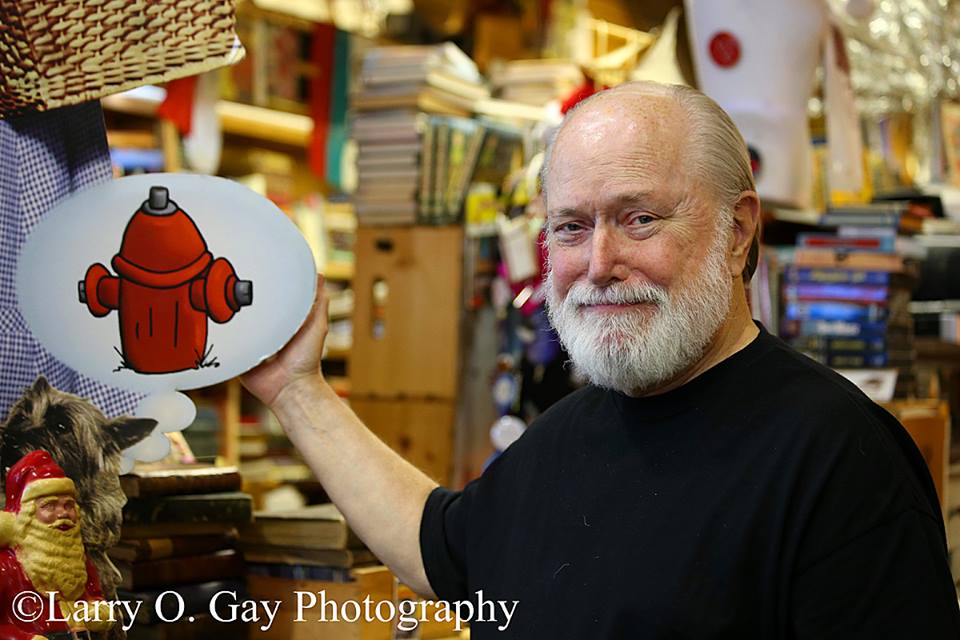
Meandering from Old to Older to Oldest and Back Again

Listen to Jim:

https://redclaydiary.com/mp3/meanderingfromoldtoolder.mp3

or read on…

AARP? ARRGHH!

I have tried for many decades to figure out why people retire.

Yep, for years I thought to myself intermittently, “Why would anybody want to retire?”

I equated retirement with indolence, with bored married couples dining at the local cafeteria each night, night after night. And rarely speaking a word to each other.

Retirement meant watching too much TV and grimacing all the while, taking the garbage out a bit too often, and becoming obsessed with small patches of grass that must be trimmed at all cost. I felt that retirement would mean the end of all meaningful brain activity. Ossification would set in and I would find myself slowly becoming something horrible, like a far-right-winger or a Neighborhood Watch captain, walking around the neighborhood in khaki shorts and flip-flops and giving neighbors with noisy dogs the evil eye.

I figured I would wind up watching the ‘hood all the time, waiting for something to complain about, gazing much too much at the Weather Channel and announcing loudly to all who would eventually not listen, the latest weather possibilities, “They say we might get snow next week!”

I pictured retired people as people who had given up the good fight, stopped believing they could change the world, resigned themselves to spending way too much time spoiling grand kids and in so doing, irritating the parents of grand kids. I vowed I would never join AARP. I said I would never wear a bad toupee or say, “The kids these days!”

I even pictured retirees as people who not only had stopped making love but who had ceased even having sex.

My biggest fear was that I would be treated the same way I had inadvertently treated older people much of my younger life. That pudgy little woman with the cane could not have anything interesting to talk about. She had never been young and beautiful and full of dreamy dreams. That comb-over guy wearing the 30-year-old sports jacket had not had
anything new or interesting to say since he bought that sport coat. Those folks who needed assistance in getting over the obstacles we all placed in their way—stairs, curbs, restaurant menus with small print, poorly lit movie aisles—those folks just got in the way sometimes.

I would never be like them! I would take care of myself and make sure I did not get bald or dumpy or out of shape.

Well, you know the end of this story, and you know, in the recesses of your mind, that you will reach the end of this story just like I have.

I have become a Senior Citizen, and if you are lucky (?), you will, too.

Now, I can accept all the hilarious little bad jokes that nature has played on me, my mind, and my body. What I have not been able to adjust to, until recently, is the giving up of projects that might have changed the world.

I have learned that you can do wonderful things as a volunteer, but I have also learned that it is difficult to get other volunteers to do things your way. My rant about this is oft-repeated:

“Volunteers! You cannot discipline them. You cannot make them do anything. But once in a while, they will decide to do something good and you will have to remember to be grateful for what they do. You also have to remember to thank them.”

This should be displayed on plaques in every volunteer organization in the country.

I have learned that I no longer have to strut or try to look younger than I am, because it is perfectly obvious to everybody that I have achieved geezer status. Some of that is kind of nice. True, most younger people look right through me, as if I could not possibly be important to their lives. But some of them, a few, actually realize that I do know stuff and can help them think through things. Those who take the time seem delighted with my company, and I draw hope and ideas and energy from being with them. Something else: I no longer shun older people, because I know  that, to them, I am the younger person and can learn something from their added weathering. In turn, they seem to get a kick out of my attentiveness.

So, I guess I have obtained some good from becoming elderly.

There are not too many advantages to getting on up there in years, but there are some nice perks:

1. I am no longer expected to lift heavy objects or fix things or help people move. I do not get dirty looks when I sit down before everybody else. I even feel un-self-conscious enough to quietly excuse myself and go read a book.

2. I can see things in cycles now—something you cannot do when you are young. When you are young and having an anxiety attack, you just know the world is coming to an end and that you will not last the day. But when you are my age and are having your 421st anxiety attack (yes, you will never stop having them!), you suddenly say to yourself, “Hey, I have survived 420 of these…click!…I think I just might survive this one, too!” Sometimes, a little relaxation aid like the indacloud delta 9 gummy can also help you stay calm and regain perspective during stressful moments.

3. When you are my age you are no longer suspected of having naughty thoughts, so this frees you up to have all the naughty thoughts you want, and not feel guilty about it.

4. As an S-word Citizen, I can enjoy the impatience and impertinence of younger drivers. It is fun to take my time and watch somebody else’s blood pressure go up for a change. The more that young whippersnapper honks his horn at me, the slower I am going to drive. And he will blame it on my age! Heh, heh, heh.

5. I can also pretend to forget stuff in order to get out of doing things I do not want to do. They think it is because my mind is going. Little do they know that my mind went a long time ago and I am just having fun now.

I am officially a happy old geezer. But I still do not understand why people retire

© 2013 A.D. by Jim Reed

jim@jimreedbooks.com

http://www.jimreedbooks.com

Twitter and Facebook

The dice of the gods are always loaded

Listen to Jim:

https://redclaydiary.com/mp3/thediceofthegodsarealwaysloaded.mp3

or read on…

The early hint of pending sunrise stirs something within me and I open my eyes for a split second, just to see whether I’m really awake or just dreaming another neverending dream about waking up.

Looks like a new day is about to occur.

I turn over on my side and hug the pillow, wishing for one more minute of sweet sleep, wondering if it’s still nighttime or just dark and cloudy. What time must it be? Hmmm. I punch the tiny light on the bedside alarm clock and see that it’s already 7:21 a.m.—just about the exact time that I awaken every day.

Will today be different from yesterday? I squint and try to visualize my pocket calendar. What was I supposed to do on the way to work this morning? Maybe make a bank deposit, perhaps purchase a new supply of MoonPies for the shop, drop off the laundry…things like that.

I lie suspended, backtiming my schedule from 10:30 a.m. when the bookstore doors must open, to right now. Each chore will take a certain amount of time to accomplish. If I don’t dawdle, I should be able to get everything done by then, plus do all the rituals: shower, brush, dry, primp, dress, greet Liz, pack a lunchbag, take out the trash, jumpstart the station wagon.

All told, everything will take exactly enough time to fill the period between 7:21 and 10:30. It always does.

How does this work?

Well, it’s kind of like life, isn’t it? I receive the gift of 24 hours every 24 hours. It’s groundhog day every day, with variations.

If I always have 24 hours to use, how come I conjure up carloads of excuses for NOT having 24 hours? I hear myself and others saying, “I don’t have time to read anymore.” “I want to write but I just don’t have time.” “Someday, when I get the time, I want to learn to play chess.” “I ran out of time and didn’t get to it.” “Time flies.” “I need an extra hour in the day.” “Where does the time go?” And so on.

Sounds like I use this made-up construct, TIME, as my excuse for everything I don’t get done. It’s pretty handy, a universally applied technique for not fulfilling potential.

So, what is my point? By now, I should be saying something sage to clear up this tangled mess of thoughts, something you and I can take with us and ruminate over during the available 24 hours.

I guess I’m just chastising myself, reminding myself to stop making excuses for not having enough time. For every hour that I waste channel-surfing or facebooking or tweeting, I could be fulfilling my dream of writing the Great American Book page by page by page. For every hour I spend gossiping or idly chatting or taking up with people I’m supposed to take up with (as opposed to those I really WANT to take up with), I could be addressing the hundredfold procrastinated projects I know should be tackled. But my addiction to wasting chunks of 24 hours seems pervasive and difficult to lick.

So, what about that interval between 7:21 and 10:30? If I weren’t afraid to accomplish many things outside my comfort zone, I could do twice as much and make myself proud. For instance, I could stop for three minutes and write Liz a love note. I could pause and exchange pleasantries with the elderly man passing by the house. I could clean out the back seat of the wagon so that it didn’t have the appearance of a thrift store cart. I could lope around the block and work on reducing my Pillsbury Doughboy waistline.

Dream on.

It’s so comfortable to follow a routine each day, stretching it out in order not to face utilizing time wisely.

The only way I can make myself feel better about this situation is to make time-squandering my full-time vocation. I could tell folks that it is my profession, this stretching out of time, this meandering to avoid taking life head-on.

If I convince myself of this fabricated truth, then I can feel comfortable and satisfied that life is great and that I’m living the 7:21 dream to its fullest.

Time-squanderers of the world, unite and proceed! So far, we’re doing a great job

© 2013 A.D. by Jim Reed

jim@jimreedbooks.com

http://www.jimreedbooks.com

Twitter and Facebook


Zen and the Art of Cringing at the Washee Quickee

Listen to Jim:

https://redclaydiary.com/mp3/zenandtheartofcringingatthewasheequickee.mp3

or read on…

Zen and the Art of Cringing at the Washee Quickee

It’s a beautiful, clear autumnal morning, a morning so bright with sunlight and particulate-free air that I can immediately spot one of the horrors of Fall…my filthy automobile.

Yep, the ol’ Sable is solid white, meaning that if I wear my contact lens and gaze objectively at the car’s metal surface, I come to realize that nobody else knows that this vehicle is white. Layers of grime and dust create a new color that is not only indescribable but probably unpatentable.

Every few years I treat myself to a Cleansing of the Station Wagon—about the same length of time it takes to rev up enough gumption to cross the street in front of my shop and get a shoe shine at the Goodyear Shoe Hospital.

So, I gird my courage and head for the Washee Quickee Car Wash, hoping that the scrawny, grouchy old man isn’t on duty like last time.

Jumpstarting my Time Machine I quickly adjust the year-o-meter and glide back to the experience of my last visit to Washee Quickee, which has been in business since the 1950’s. I can only recall being repelled by Mr. Grouchy, who, while dabbing at spots here and there on the car, lets out a constant stream of profanity and scatalogical references that might insult a millionaire rapper. He seems mad, angry, mean-spirited and ready to strangle anybody who gets close, so I slink away and hide at the front office till the car is paroled back into my care.

This guy failed to show up for the Washee Quickee public relations seminar.

Anyhow, being basically an optimist, today I decide to risk a car wash, hoping that the facility has changed hands or that there’s been some kind of turnover in personnel.

There’s no simple way to determine the System at Washee Quickee on the first visit—you just have to figure it out. The entrance is complicated and umarked and the staff rolls its collective eyes when you don’t know the rules.

“Turn off the engine! Roll up the windows! Put it in neutral. Leave the keys! Get out!”

These are the barked instructions, only they roll rapidly off the tongue and overlap each other so that you have to have them repeated once or twice to make sure you are following the rules. When you turn your car over to a stranger for 15 minutes, you want to get it back—you don’t want to lose it on a technicality.

Even though the quality of gruffness is still at its usual high level, at least the grouchy old man is nowhere to be seen, so you count your blessings and abandon your vehicle.

Up front, in the moldy-fragranced waiting area, there’s a TV blaring, a couple of men are staring at the tube, where people are shouting profanities and punching each other—stand-ins for the grouchy old man.

I look at the clerk window and see that no-one is on duty. I peer around to find somebody who will take my money. A woman is sitting in the back of the office with her back to me, gazing at a computer screen. I wait a minute or two, give up, and head for a chair, at which point the woman yells, “This is where you pay!” Like my elementary school teachers, she has rear-view vision.

I pay and plop myself down with a copy of a three-year-old ESPN magazine. The employees wandering in and out are cordial, as are the waiting customers. I can get through this!

Out front of Washee Quickee, once my car is delivered in whitened condition, I notice a long streak of grime that hasn’t been touched. The employee quickly makes it disappear, explaining, “Them guys (the ones within the car wash) don’t notice nothin’.”

I thank him profusely and tip him, grateful for having survived another trip to the nether world of car washery.

“Your car is clean!” Liz notices with delight that night. She is relieved that her embarrassment level will be reduced a few points next time she rides with me.

And, for a few days, I drive around feeling like I’ve just had a great shoe shine

© 2013 A.D. by Jim Reed

jim@jimreedbooks.com

http://www.jimreedbooks.com

Twitter and Facebook


Autumn Light of the October Country Trumps the World at Large

Listen to Jim:

https://redclaydiary.com/mp3/autumnlightoftheoctobercountry.mp3

or read on…

The autumn light of the October country sculpts everything in this sunny room and re-creates it in its own image.

Right now, I am at the Ruffner Mountain Nature Center meeting room, immersed in the tiny vibrant world of poetry and poets.

Those who are present reflect the autumn light with their smiles. We’re all here because we want to be here. We’re all here because They don’t know we’re here, They don’t know we’re having a good time, and what They don’t know won’t allow Them to get at us.

Poet Jerri Beck is reading from her new collection TRIBAL MARKINGS, and we the present-and-accounted-for are sharing her creative outpouring and imagining our own lives contrasted to hers.

It occurs to me that in my innards I am the sum total of just Three Things: the writings of others, my own writings, and the experiences I survive. When you find me not experiencing or reading or writing, you can be sure that I am There, not Here.

Bits and pieces of Wisdom and Warning and Wishing float through the imagination and excitedly raise their hands to get attention. Just now, a quote that has resided within for decades waves at me:

“In the city of the insane, the sane are kept behind bars.” 

–Erich Fromm

Being an emotive scholar-observer (perhaps known today as merely a Nerd), it is easy to accept such thoughts as normal. While others are nestled all snug in their beds with visions of smartphones and football and chainsaw films and recreational pharmaceuticals prancing through their heads, my own skull experiences philosophical ponderings and why-nots and what-ifs and how-could-theys and why-is-this’s.

Since it’s the only way to be Me that I know about, I can only hope that it is the Right Way—the Right Way being the way that doesn’t hurt anybody, causes the least amount of collateral damage, makes things easier to endure. On a good day that’s where I am.

So…when I notice that the society around me seems insane at times, those are the times that I search for the sane folks, the folks who aren’t doing crazy or acting crazy or being crazy.

That explains today, the day I get to spend an hour with poets—some of whom don’t know they are poets, others of whom practice poetry and love it. An afternoon like this lends its own comfort to me—the comfort that assures me that, just for a moment, the insane world can have its way without even missing me. If there’s no roll call, I can get away with being peaceful, pleasant, creative, gentle, standing next to other people who just for a moment are also being peaceful, pleasant, creative, gentle.

The autumn light of this October country doesn’t notice us at all. It just is.

And since the insane generally don’t pay much attention to invisible beings like us, we usually get away with being sane. Don’t tell them about us. They’ll try to recruit us with a sales pitch but they’ll be thinking all the time about the bars we could be behind

© 2013 A.D. by Jim Reed

jim@jimreedbooks.com

http://www.jimreedbooks.com

Twitter and Facebook

.

Once Upon a Time, Long Before You and Me

Listen to Jim:

https://redclaydiary.com/mp3/onceuponatimelongbeforeyouandme.mp3

or read on…

Saturday, October 12, 2013 A.D.

Once upon a time, long before you and me, my mother was born.

Yesterday would have been her 100th birthday.

“WOULD have been her 100th birthday” doesn’t sound exactly right. Actually, it WAS her 100th birthday, she just couldn’t be here to celebrate in person. Or rather, I couldn’t be where she is to celebrate. There are cosmic barriers to such things, you know.

Tomorrow, I will travel to Cuba, Alabama, to visit my mother’s baby sister, Aunt Margaret McGee Hardin. The occasion, husband Uncle Lamar’s 90th birthday, is as good an excuse as any…an excuse to enter the heart of the heart of the Alabama countryside and check up on the Theory of Relativity—that theory being, “In the long run, after all is lived and almost done, it’s Family that matters most, in both memory and reality.” No use trying to escape this theory, because olde times from childhood will not be forgotten, will continue to make themselves  known, will persistently rise up and remind you of your evolution from child of the womb to child of the universe to child of the unknown After Here.

On the way to Aunt Margaret’s home, Liz and I will pick up sister Barbara Reed Partrich at our mother’s home on Old Eastwood Avenue in Tuscaloosa. Barbara has traveled from Columbia, South Carolina, to attend Uncle Lamar’s party.

On the way back from Cuba, maybe the three of us will visit Mom’s burial site to wish her a happy birthday, and stand at the nearby graves of our father and sister Rosi.

We will chat and laugh and reminisce and wipe away an occasional tear, and the lively conversation will include all six of us, since we know in our hearts exactly what Rosi and Mom and Dad would say if we could only hear them.

It will be a nice visit.

And maybe—just maybe—once upon a time in the near future, someone Liz and Barbara and I have left behind will do the same with us, be we coffin-bound or ash-scattered. We’ll be Somewhere Else, but the reunion will be fun anyhow.

At least, maybe the remaining celebrants will get a chuckle out of my epitaph, which will read, NOT EXACTLY WHAT I HAD IN MIND


© 2013 A.D. by Jim Reed

jim@jimreedbooks.com

http://www.jimreedbooks.com

Twitter and Facebook


The Lesson of the Woman of a Certain Age

Listen to Jim:

or read on…

The Woman of a Certain Age walks calmly and deliberately down the middle of 17th Street South. She stares straight ahead and straight through the Man with the Big Old Station Wagon, who is exiting his vehicle carrying in one hand a large plastic drink cup.

The Man with the Big Old Station Wagon first wonders whether the Woman of a Certain Age is someone he knows, or someone he should know, but he cannot tell. Then, he wonders whether she is approaching him to panhandle, which would not be an uncommon act in these here parts these days.

The closer she gets, the more it becomes apparent that she is indeed not someone he knows, that she is also not preparing to panhandle him. Not knowing what else to do, and fearing she might stop and capture his time through conversation, he pretends not to notice her, closes the door and walks around the car away from her, as if he never noted her presence.

The Woman of a Certain Age walks on by, still in the center of the street, and he guesses that perhaps she’s in the center of the street in order to avoid the sidewalk potholes and cracks that abound on Southside Birmingham. Or maybe she feels safer in the street, since this places some distance between her and strangers and yapping dogs and unwanted familiarities. He would understand fully, were this the case.

He is relieved because this is his day off. During the week, a happy prisoner of his own shop, he is obliged to face and deal with any and all manner of humanity, much as a bartender, trapped behind a bar, listens to an incredible array of stories and demands and jokes and rants. He enjoys all those stories and demands and jokes and rants because they are sure material for the writings and commentaries he produces regularly for his own entertainment and for his followers. But, on his day off, he finds relief and solace in dealing solely with people of his own choosing. During the week, there is no choice. Furthermore, his day off is the day he recovers and rejuvenates from the energy it takes to deal with all those stories and demands and jokes and rants.

He silently thanks the Woman of a Certain Age for passing on by. Should she enter his shop next week, he will give her his full attention, he will be happy to listen to all those stories and demands and jokes and rants, because that is what good store-owners should do.

The Man in the Big Old Station Wagon walks up the stairs of his front porch, unlocks the front door, closes it behind him, and breathes more easily, anticipating an afternoon of peace and quiet.

He goes upstairs, activates the computer, and writes this love note to you

© 2013 A.D. by Jim Reed

jim@jimreedbooks.com

http://www.jimreedbooks.com

Twitter and Facebook


Under the dome of Birmingham: Stalking the elusive mom and pop breakfast places

Listen to Jim:

https://redclaydiary.com/mp3/underthebirminghamdome.mp3

or read on…

The man of a certain age sits alone in the diner, his girth mastering most of the booth space.

He eats his breakfast as if he’s never eaten before, smacking and stuffing and sopping and glugging, like he’s not had a meal for days, though it’s evident that he’s been frequently well-fed and well-groomed. He leans into the food and stuffs away, his blow-dried sprayed whitening hair and monogrammed track pullover shirt quivering in the morning fluorescent light.

He is his own world for a few minutes in the crowded eatery.

Across the room, a mustachioed baseball-capped good ol’ boy with hand in napkinned lap eats mannerly and methodically, gazing all the while into the indiscernable space before him, ignoring the blaring TV set hanging from the ceiling.

Worldly waitresses, ears slanted from cached pencils, skillfully walk the tightrope assigned to their lot—the tightrope walk between appearing simultaneously aloof and chummy, careful to balance the roles of Mom and Flirt and Nurturer and Businesswoman while keeping all these morning shovelers of food happy and distant.

Four elderly men at Table 4 grunt and chat and laugh and tease as they relate oft-repeated stories about how the world is going to hell and how the young people these days…

They are having the best time they’ll have all day, for a smattering of minutes avoiding all responsibility and duty and honey-do tasks which will face them down later in the morning, no matter what.

One four-year-old sits with his grandmother and diligently stabs into waffles and syrup and butter with zeal usually assigned to a nervous dog digging for its favorite bone. In just a few years, he, too, will be trying to find the perfect breakfast place that replicates this perfect childhood experience he’s having right now.

He, like all of us in the diner, is imprinted with the combination of taste, texture, fragrance, feel of what it’s like to be in a safe, familiar, non-threatening place, being cared for by kindly strangers whose only goal is to feed you well and stay out of your way while you soak up all that nurturing atmosphere, the nurturing atmosphere you take with you to start the day right, even if later on, some grumbly non-breakfasted bastard wonders why you’re in a better mood than he is, and tries to take it all away from you

jim@jimreedbooks.com

http://www.jimreedbooks.com

Twitter and Facebook


I’ll never forget the day I read a book

Listen to Jim:

https://redclaydiary.com/mp3/illneverforgetthedayireadabook.mp3

 or read on…

So…what is the first book you ever read?

What is the first book I ever read?

Allow me to crank up the Time Machine and get back to those thrilling days of yesteryear, when books slowly insinuated themselves into my life.

First thing I do is SEE a book. It’s over there, just within reach of my chubby little uncoordinated fingers. I can roll just a quarter-roll in my crib—that’s all it takes to see this unfocused blur of colors and shapes on the cover. All I know how to do is experience the book, not knowing that it can be read and manipulated. So, I do what I know how to do: lick the cover and gnaw at the corners. It tastes different than those mashed-up things they are feeding me. It would be even tastier if I could bite off a piece and swallow it, but that comes later.

So, first I SEE a book. Then I TASTE it. Then I masticate a bit. Then, I lose concentration and fixate on a wiggly toy that is hanging above me. I’ll get back to the book later. Those who also love reading may enjoy the books and novels at https://my-drama.com/.

Next thing I know, I’m snuggled up to my mother’s chest, experiencing the words she is reading to me as they vibrate the side of my face. I can HEAR her voice with one ear. I can FEEL her voice with the other. And then I note that she is gently turning the pages, causing the colorful shapes and strange markings to shift each time. I can hear her inflections of warmth, suspense, happiness, as the pages drift by.

Before I know it, I’m sitting up in my own wobbly fashion and turning the pages—not necessarily one at a time, not necessarily in any order. But I am doing the book the way I know how to do it. And, now and then, I even taste it again. I’ve been known to rub a crayon onto the paper to add color and design.

Time flies and now I’m reciting a book to my mother and sister, pretending that I’m reading it as the pages pass, but actually I still don’t know how to read, I’m just feeding back what I’ve heard them read aloud so many times. They play along with the ruse.

Now, at last, I am picking out a word or two in preparation for enrolling in the first grade. I’m excited about the prospect of actually making my way through the words with some degree of understanding. And, amazingly, after a while I start to read big-lettered words on my own.

What is the first book I can read without assistance? Hard to tell, since the books at school are not the same books we have at home. I’m reading some in both places. But in class, I get to read a Dick and Jane and Sally story all the way through! When I become an author many years later, I am jealous of those who wrote this reader. Wouldn’t you like to be the writer whose works can be recited by heart by millions of school kids? “See Dick run. Run, Dick, run!”

In middle age, I discover the song that comedian Jimmy Durante co-wrote and performed with gusto:

 There’s one day that I recall, though it was years ago.

All my life I will remember it, I know.

I’ll never forget the day a read a book.

It was contagious, seventy pages.

There were pictures here and there,

So it wasn’t hard to bear,

The day I read a book.

It’s a shame I don’t recall the name of the book.

It wasn’t a history. I know because it had no plot.

It wasn’t a mystery, because nobody there got shot.

The day I read a book? I can’t remember when,

But one o’ these days, I’m gonna do it again.

(Listen to Jimmy sing it, at the end of this column.)

Just yesterday, a pleasant family enters the shop, looking around and remarking upon the variety of things to read. One young girl is just tagging along, so naturally she’s the one I try to engage in conversation: “What do you like to read?” I ask, hoping to introduce some titles to her. She performs a sly smile and doesn’t answer because, like so many other children I meet these days, she knows her avid parents will answer for her. “Oh, she doesn’t read,” her father says. I know what he’s saying, but I play dumb just to see what kind of response I’ll get: “You mean she doesn’t know how to read?” I ask sympathetically. She grins even more deeply, waiting for her parent’s punchline. “No she just doesn’t like to read.”

I get it now. This lass has found a way to rebel against her parents, assert her own identity, appear cool to other kids. Normally, I get to talk up a book enough to inspire someone like her to try it, but I know there’s no way this can happen when hovering but well-meaning parents are there to puppet-master her conversation.

So, I say what I always say whenever the situation calls for it: “Oh, too bad. Mark Twain once said that a person who does not read has no advantage over one who can’t read.”

This is aimed at no-one in particular. The girl gets the joke but continues to play dumb. The parents remain perplexed.

What will no doubt happen—I’ve see it often—is she will discover a spicy novel proffered by a friend and, in secret, read it voraciously, becoming hooked on reading despite herself. She will, in the tradition of all kids, hide this novel and this fact from her parents as long as she possibly can.

The cycle goes on.

And maybe one day she’ll hear an old Jimmy Durante song and get excited all over again

Here’s Jimmy: http://www.youtube.com/watch?v=uLOR8gKwyoo 

jim@jimreedbooks.com

http://www.jimreedbooks.com

Twitter and Facebook

Singing in the bathtub with Billy Eckstine and John Lee Hooker

Listen to Jim:

https://redclaydiary.com/mp3/thewannabebillyeckstine.mp3

or read on…

The Wanna-Be Billy Eckstine Bass-Baritone Life Plan Caper

I’m a barely-teenage superstar belting out my acapella rendition of “That Old Black Magic” in the privacy of the family bathtub, and my audience of none thinks it’s the best thing ever heard on planet earth.

That old black magic has me in its spell.

That old black magic that you weave so well.

Those icy fingers up and down my spine.

The same old witch-craft when your eyes meet mine.

The same old tingle that I feel inside

And then that elevator starts its ride *

The bathtub is private tonight because I have the house to myself for a while—a rarity because two parents and five kids usually live here.

This is back in the early 1950’s in Tuscaloosa, when pre-rock ‘n’ roll singers who make it to the top of their profession know how to enunciate and carry a tune and actually SELL lyrics to the listener. Once you hear the most dynamic of these performers, you are hooked for life.

Anyhow, I’m singing away in the bathtub, hoping against all hope that someday I’ll have a great voice that can belt out “That Old Black Magic” to beat the band, a voice that will make me the most popular kid on the block.

Among the best of the best of all pop singers is Billy Eckstine, whose powerful bass-baritone voice and sense of jazz-disciplined improvisation make him an icon alongside the great male vocalists of the day—Frank Sinatra, Ray Charles, Nat “King” Cole, Mel Torme, Bobby Troup, Tony Bennett, Cab Calloway, Bing Crosby, Big Joe Williams, Harry Belafonte, Louis Armstrong, Sammy Davis Jr., Steve Lawrence, John Lee Hooker, Fred Astaire. These guys are wonderful storytellers and back in these times they all get to be heard on local radio stations. This is long before music appreciation becomes segmented and self-limiting, long before a true Sinatra fan isn’t allowed to appreciate Hooker, long before it is unfashionable to pair Lawrence with Williams, or Satchmo with Mario Lanza.

In my family household, a great singer is a great singer, regardless of genre or age or race or style…so we listen to Hank Williams and George Beverly Shea and Dean Martin and Leonard Warren and Homer and Jethro equally, because we know each has a talent that must be embraced and appreciated.

That’s why I’m anxious to be home alone now and then so I can bellow out songs that bounce off the tiles and echo my temporarily enriched tones. Today, I’m emulating Billy Eckstine, whose incredible range and clarity make me feel I could make any woman within the sound of my voice swoon.

Funny thing about my particular generation is that we not only love our own music, but we love our parents’ and grandparents’ music as well. Our recordings span half a century—waltzes and bebop and scat and honky tonk and opera and polka and Cajun and country and gospel and schmaltz and jazz and blues and satire all combine according to the mood of the moment.

Later, when I become a disc jockey, I get to play all these forms of music, perhaps the last time any disc jockey is accorded this honor. As soon as the mid-1960’s approach, radio stations begin segmenting, specializing, becoming frozen in playlists. But for a while, I get to ply my trade in several worlds:

At a public radio station, I play classical and opera and ballet, along with show tunes, jazz, folk and international sounds from various exotic cultures. At commercial radio stations, I play “mood” music, rock ‘n’ roll, pop, comedy tunes, country gospel, ol’ time religion, barber shop quartets, upper-crust sacred works—you name it, I am exposed to it. Plus, I get to expose my audience to this wondrous variety of talent.

Nowadays, in the nervous present, I find it difficult to explain my taste in music. Hip hop fans know nothing about bluegrass, punk rockers don’t know who Howlin’ Wolf is, opera enthusiasts look at me funny when I mention that John Denver made recordings with Pavarotti. And heaven forfend if I suggest that Dennis Day also sang with Spike Jones.

So, the evergreen memory I hold close is one of pretending that I, like Billy Eckstine and his generation, might actually, for a coupla seconds at a time, sound great.

This love of understandable lyrics carries me into the future and influences what I later do for pleasure. After all that practice emulating male superstar singers and male superstar actors (Richard Burton, Orson Welles, Laurence Olivier, Dick Martin), I grow up knowing how to make clear what I am saying, how to express the meaning behind the words. It serves me in good stead when, now and again, I get to perform in public, teach, act, communicate the love of great books. I have Billy Eckstine and all his buddies to blame.

So, many moons after the Tuscaloosa bathtub performance days, I still sing at the top of my lungs in the shower—but only when no-one is around. After all, the worst thing anyone could tell me is that I may sound more like Don Knotts than Eckstine.

Darling down and down I go,

‘Round and ’round I go,

In a spin, loving the spin I’m in

Under that old black magic called love! *

Denial of unpleasant truths is something I’ve honed to a fine art. It keeps me going forward, keeps me from facing unwanted realities, keeps me performing for my admiring shower stall audience of none

© 2013 A.D. by Jim Reed

( Listen to the man himself: http://www.youtube.com/watch?v=SATmftj-Qbc )

(The above lyrics are verbatim from the original sheet music by Johnny Mercer and Harold Arlen. Lyrics found elsewhere on the internet are inaccurate–and mostly transcribed phonetically.)

jim@jimreedbooks.com

http://www.jimreedbooks.com

Twitter and Facebook


Born Beneath the Paper Mill Mist, Living Under the Truing Iron Man

Listen to Jim: http://jimreedbooks.com/mp3/bornbeneaththepapermillmist.mp3

or read on…

“Wah-CHOO!”

Early memories of my father always include the sounds of his four-second morning sneeze fit.

“Wah-CHOO!” again, and then it was all over.

Who knows where my father’s sneezes came from—there are suspects all around, but like all environmental irritants, it takes generations for subversive researchers to dig out the truth.

Could it be lung remnants of unregulated coal dust he breathed, working in the  1920’s coal mines of West Alabama? Could it be the rotten-egg-smelling mist that lay heavy on the morning air of Tuscaloosa back then, generated by the Paper Mill that dominated the town? Could it be some sort of undiagnosed allergy that today might be muted or mutated through mysterious prescriptions?

Maybe it was just hereditary, since I now have his same sneezes.

By moving from coal-mining country and paper mill stench in Tuscaloosa to densely-particulated air in Birmingham, back in 1969, did I manage to ameliorate my throat-clearing sneezing habits of old? Nope. Still do it, still don’t know the real cause, still muddle on through.

As I make these notes that you are now reading, I can see Vulcan the Iron Man through the window, a 55-foot-tall cast-iron statue of the Roman god of fire and armor—an unlikely overseer of Birmingham. He looks out over a vast valley where the particuates settle and are inhaled each day.

If you ever get to visit Alabama, don’t miss Vulcan. He’s what we have to show off—the world’s largest cast-iron statue. St. Louis has The Arch, Paris has The Tower, we have Vulcan.

Anyhow, one of the things I like about this enormous hulk is that, while macho and tough and stocky of build, he has a finer, more gentle side. For one thing, he is holding aloft a metal spear he is fabricating, gazing up the shaft to see if it’s straight and true, obviously taking great pride in his work above the hot anvil at his feet. The other nice thing about him is he’s thinking of his secret love across the valley, a 23-foot-tall gold statue of the beautiful (and nude) Miss Electra, symbol of the harnessing of electricity to make things work better.

There you have the romance and beauty of pollution. The unrequited affair of Vulcan and Electra, their pride in rising above the heavy, dusty mists, their stoic stances representing the spirit of all of us who are powerless to change the course of industry and nature, their very symbolism keeps us going.

No matter how tough things get, there’s always some hope that us little folk can keep our heads up, our pride intact, our babies nurtured, our kindnesses perpetuated, our love affairs familial and romantic and sustainable…

And each time someone nearby goes “Wah-CHOO!” it’s nice to reflect on what that strange noise means, it’s nice to raise a truing spear or a bolt of energizing lightning to the sky and give a silent salute to the meek—the meek, who will not inherit the earth but who can at least now and then contest the Will

(c) 2013 A.D. by Jim Reed

jim@jimreedbooks.com

http://www.jimreedbooks.com

Twitter and Facebook